 Image 1 of 4
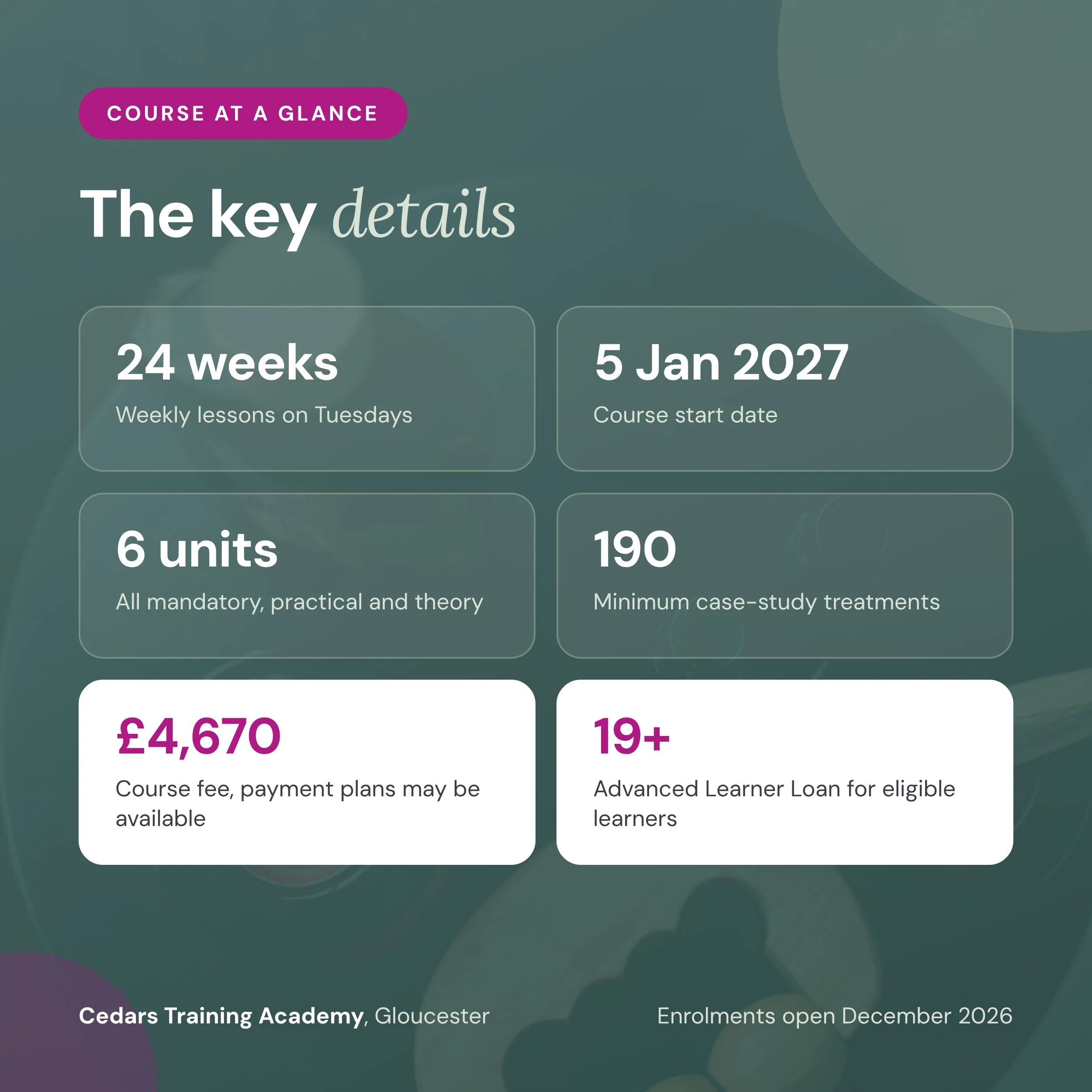 Image 2 of 4
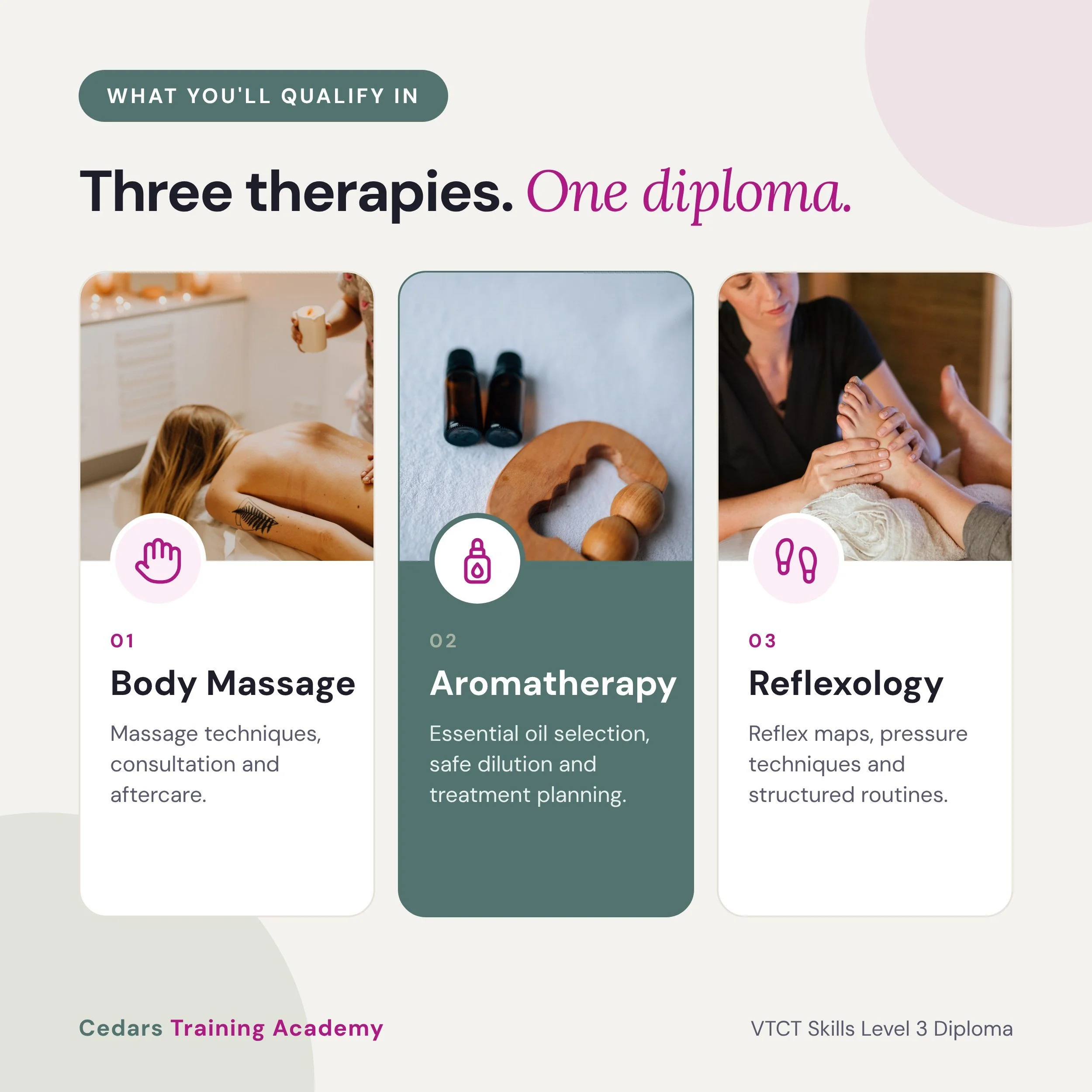 Image 3 of 4
 Image 4 of 4
Level 3 Diploma in Complementary Therapies in Gloucester
Qualify in body massage, aromatherapy and reflexology with one nationally regulated VTCT Skills diploma.
Take the next step towards a rewarding career in holistic health and wellbeing. The VTCT Skills Level 3 Diploma in Complementary Therapies at Cedars Training Academy prepares you for professional practice as a complementary therapist, building the knowledge, practical skills and confidence to offer a range of treatments safely and effectively.
You'll develop professional competence in three therapies: body massage, aromatherapy and reflexology. Alongside hands-on training, you'll study anatomy, physiology and pathology, client consultation and the business skills needed to work in, or set up, a complementary therapy practice.
Whether you're starting a new career, exploring self-employment or building a broad foundation in holistic therapies, this diploma gives you a structured pathway into professional practice.
January 2027 intake. Enrolment appointments run throughout December 2026 and can be completed remotely or in person at our Gloucester Academy.
What you'll learn
Six mandatory units. Select a unit to see the topics covered.
Unit 1Principles and Practice of Complementary Therapies
Understand the complementary therapy industry and the professional responsibilities of working as a therapist.
- History and origins of complementary therapies
- Traditional and contemporary approaches
- Principles of holistic health and wellbeing
- Professional codes of conduct and ethics
- Legal responsibilities and professional standards
- Professional associations and regulatory bodies
- Client consultation and communication
- Confidentiality, informed consent and record keeping
- Professional boundaries and referral procedures
- Safe and responsible working practices
Unit 2Business Practice for Complementary Therapies
Gain the knowledge and skills to plan and manage a complementary therapy business.
- Business structures
- Researching business opportunities
- Target markets and client needs
- Business planning and finances
- Pricing treatments and managing costs
- Marketing your therapy services
- Professional communication and customer service
- Legal requirements, insurance and responsibilities
- Choosing premises, equipment and resources
- Writing a business plan for self-employment
Unit 3Anatomy, Physiology and Pathology for Complementary Therapies
Build a detailed understanding of the human body to support safe professional practice.
- Organisation and structure of the body
- Skin, hair and nails
- Skeletal and muscular systems
- Nervous and endocrine systems
- Respiratory and cardiovascular systems
- Lymphatic and digestive systems
- Urinary and reproductive systems
- Common conditions and pathologies
- How health considerations inform treatment suitability
This unit provides the scientific foundation for your practical training.
Unit 4Provide Body Massage for Complementary Therapies
Develop the practical skills to plan and deliver professional body massage treatments.
- Preparing the treatment environment
- Professional client consultations
- Contraindications and precautions
- Principles and effects of body massage
- Selecting massage products
- Professional massage movements and techniques
- Adapting treatments to individual clients
- Posture and body mechanics
- Monitoring client comfort and responses
- Aftercare, evaluation and client records
Unit 5Provide Aromatherapy for Complementary Therapies
Gain the knowledge and practical competence to provide professional aromatherapy treatments.
- Introduction to aromatherapy and essential oils
- Essential oil properties and safe use
- Oil selection and dilution
- Carrier oils and treatment products
- Consultation and treatment planning
- Contraindications, allergies and sensitivities
- Preparing and applying treatments
- Adapting treatments to individual clients
- Safe handling and storage of essential oils
- Evaluation, aftercare and client records
Unit 6Provide Reflexology for Complementary Therapies
Learn the principles and practical techniques of professional reflexology treatments.
- History and principles of reflexology
- Traditional theories and reflex maps
- Reflex areas and zones of the feet
- Consultation and treatment planning
- Contraindications and precautions
- Preparing clients for treatment
- Thumb, finger and pressure techniques
- Structured treatment routines
- Adapting treatments and client comfort
- Aftercare and evaluating outcomes
Reflexology is taught as a complementary wellbeing practice, not as a method of diagnosing or treating medical conditions.
To achieve the full diploma, you must successfully complete all six mandatory units.
How is the course delivered?
A blended approach designed to build full occupational competence:
- Face-to-face practical training
- Tutor-led theory sessions
- Demonstrations and supervised practice
- Portfolio development support
- Independent home study
- Case studies
- Ongoing tutor guidance
Practical training takes place in a realistic working environment, in line with awarding body requirements.
How is the course assessed?
Assessment runs throughout the programme to evidence your knowledge, practical skills and professional competence.
- Written assignments and knowledge assessments covering therapy principles, business practice, anatomy, physiology and pathology
- 2 external examinations for the Anatomy, Physiology and Pathology unit, each with a minimum pass mark of 70%
- Practical observations of body massage, aromatherapy and reflexology treatments
- Portfolio of evidence showing your knowledge, skills and achievement of the qualification requirements
- Case studies documenting the required treatments
- Professional discussion and questioning where further evidence is needed
All required assessment criteria must be achieved before the full qualification can be awarded.
Compulsory case study requirements
As a practitioner-level qualification, you'll complete a substantial programme of practical case-study treatments. The awarding organisation sets these minimums:
| Practical unit | Minimum documented treatments |
|---|---|
| Body Massage | 30 |
| Aromatherapy | 60 |
| Reflexology | 100 |
| Total | 190 |
For each treatment you'll keep evidence such as consultation records, treatment plans, evaluations and reflective accounts. Your tutor and assessor will guide you on the standards required.
The qualification specification also identifies an additional 20 body massage case studies for learners wishing to pursue the Complementary and Natural Healthcare Council (CNHC) registration pathway. Eligibility for registration remains subject to the council's requirements.
Entry requirements
There are no formal prerequisite qualifications. However, you should:
- Have a genuine interest in complementary therapies and professional wellbeing practice
- Be able to engage with Level 3 theory and assessment
- Have sufficient English to complete written assessments, exams and client records
- Be willing and able to take part in practical treatment activities, subject to individual suitability
- Be prepared for independent study and to maintain a portfolio of evidence
- Be able to arrange suitable clients for the compulsory case studies
- Be committed to attending scheduled training and completing all requirements
Individual learning and support needs can be discussed with the Academy before enrolment.
Your career after qualifying
Completing this diploma can support progression into a range of professional roles, including:
- Complementary Therapist
- Massage Therapist
- Aromatherapist
- Reflexologist
- Holistic Therapist
- Spa or Wellness Therapist
- Self-Employed Practitioner
You could work in a salon, spa, wellness centre or complementary therapy practice, or establish your own business.
Further training and professional development
After qualifying, you may progress to specialist Level 4 complementary therapy qualifications or further CPD, including:
- → Deep Tissue Massage
- → Hot Stone Massage
- → Eastern Bamboo Massage
- → Pregnancy Massage
- → Manual Lymphatic Drainage
- → Other specialist massage and holistic courses
Further training may have additional entry requirements and does not automatically confer competence or insurance eligibility for specialist treatments.
Funding options
- Self-funded: payment plans may be available, please enquire for details
- Advanced Learner Loan: available for eligible learners aged 19+
The Advanced Learner Loan lets you spread the cost of your course, with repayments only starting once your income is above the government repayment threshold.
Contact our team for impartial Information, Advice and Guidance on the best funding option for you.
Frequently asked questions
Do I need any qualifications to start the Level 3 Diploma in Complementary Therapies?
No. There are no formal prerequisite qualifications. You should have a genuine interest in complementary therapies, be able to engage with Level 3 theory and assessment, and have enough English to complete written assessments, exams and client records.
How long is the course and when does it start?
The course runs for 24 weeks, with weekly lessons on Tuesdays at our Gloucester Academy. The next intake starts on 5 January 2027.
Which therapies will I be qualified in?
You'll develop professional competence in body massage, aromatherapy and reflexology, supported by units in anatomy, physiology and pathology, the principles of complementary therapies, and business practice.
How much does the course cost and can I get funding?
The course fee is £4,670.00. You can self-fund, and payment plans may be available. An Advanced Learner Loan is also available for eligible learners aged 19+, with repayments only starting once your income is above the government repayment threshold.
How do I enrol?
Enrolment appointments for the January 2027 intake take place throughout December 2026. You can complete your appointment remotely or in person at our Gloucester Academy.
How many case studies do I need to complete?
The awarding organisation requires a minimum of 190 documented treatments: 30 body massage, 60 aromatherapy and 100 reflexology. You'll need to arrange your own suitable clients and set aside time outside scheduled sessions to complete them.
How is the diploma assessed?
Assessment includes written assignments, practical observations, a portfolio of evidence, case studies and professional discussion. There are also two external examinations for the Anatomy, Physiology and Pathology unit, each with a minimum pass mark of 70%.
Will I need to study at home?
Yes. Alongside your weekly sessions, you'll complete independent home study, build your portfolio of evidence and carry out your case-study treatments.
Can this diploma lead to CNHC registration?
The qualification specification identifies an additional 20 body massage case studies for learners who wish to pursue the Complementary and Natural Healthcare Council (CNHC) registration pathway. Eligibility for registration remains subject to the council's requirements.
Who awards the qualification?
The diploma is awarded by VTCT Skills and is a nationally regulated Level 3 qualification.
What jobs can I do after qualifying?
The diploma can support progression into roles such as complementary therapist, massage therapist, aromatherapist, reflexologist, holistic therapist or spa and wellness therapist. You could work in a salon, spa, wellness centre or therapy practice, or set up your own business.
Is reflexology taught as a medical treatment?
No. Reflexology is taught as a complementary wellbeing practice, not as a method of diagnosing or treating medical conditions.
Enrolments for the January 2027 intake take place throughout December 2026, remotely or in person at our Gloucester Academy. We are committed to safeguarding and promoting the welfare of all learners, and you'll receive ongoing academic and pastoral support throughout your training.